


First Hand Case Study: Rotational Herbal Leys with Stafford & Sue Proctor

| Farm type: | Arable with livestock |
| Location: | Lincolnshire |
| Size: | 2000 hectares |
| Soil type: | Alluvial silts |
| Mixes used: | Cover Crops, Herbal Leys |
Farm type: Arable with livestock
Location: Lincolnshire
Size: 2000 hectares
Soil type: Alluvial silts
Mixes used: Quick Growth Cover Crop, Diverse Grazable Cover Crop, bespoke high legume, rotational herbal leys
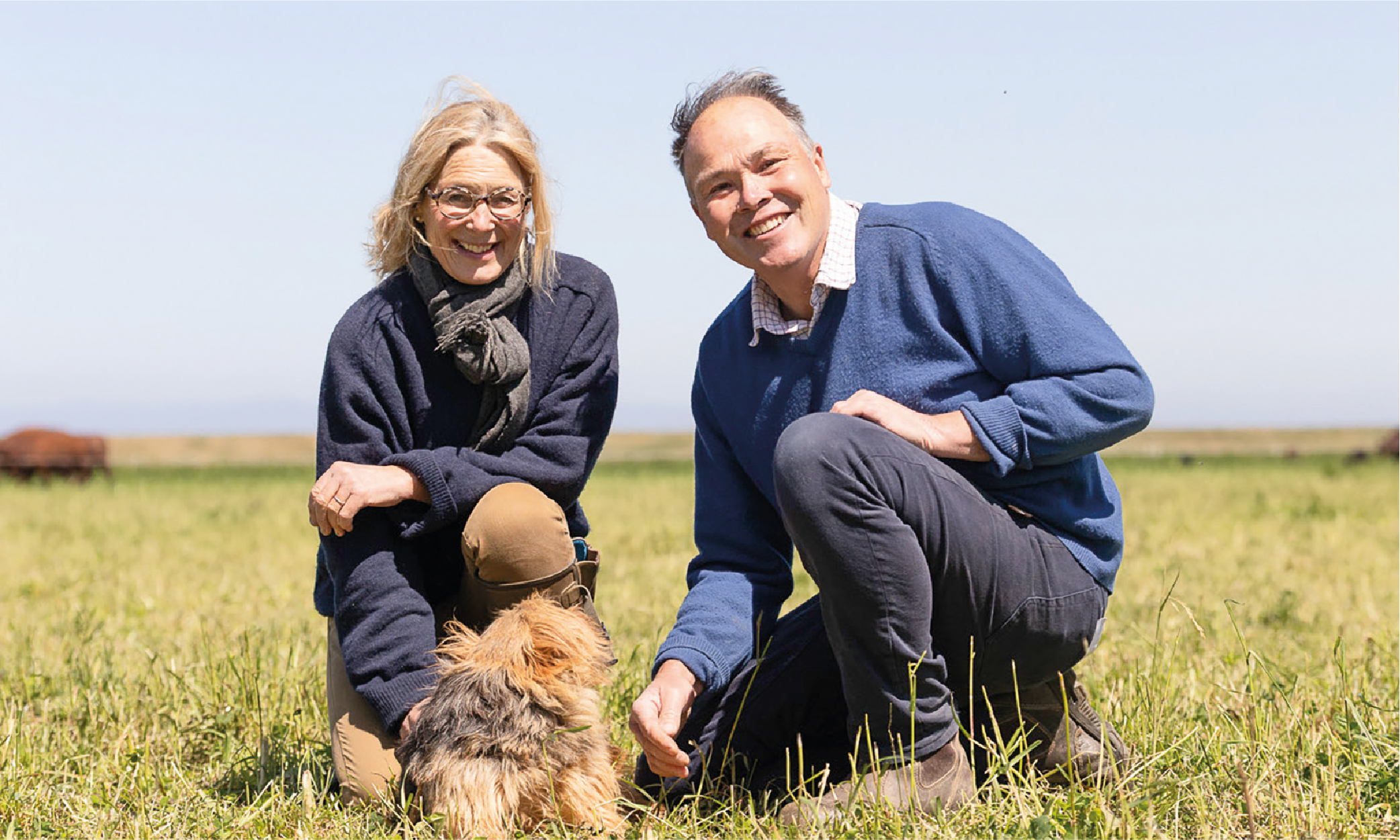
Stafford and Sue Proctor farm at Lighthouse Farm, a Crown-tenanted farm on the border of South Lincolnshire and Norfolk. The 2000 hectare holding runs along the River Nene and the Wash Frontage. It’s an historic site. The farm was once the home of conservationist Sir Peter Scott, Founder of the World Wildlife Fund, who lived at East Bank Lighthouse from 1933 when it was completely surrounded by marsh.
‘He arrived as a wildfowler and left as a conservationist and artist who went on to found Slimbridge,’ Stafford explains, going on to say how the decline in the wild bird population and biodiversity loss is the driving factor in their decision to radically change the way they farm.
‘We were on a treadmill of increasing levels of inputs and loss of natural biodiversity. Over my lifetime I’ve seen the wild bird population decline. We want to reverse that decline. Since the 1950s it’s been about using more fertiliser, more pesticides. We’re trying to get back to a more traditional method of production and the reintroduction of livestock into arable systems is key.
‘Over the last 50 years we’ve been a very intensive arable farm,’ Stafford explains. ‘Typically for this area our cropping included wheat, winter barley, potatoes, sugar beet and pulses. We now also grow beans with oats, or boats as they’re called, vining peas, mustard for Coleman’s, herbal leys and less sugar beet and potatoes.’
All the spring cropping is now preceded by overwinter cover crops which the sheep graze during the winter months, from the end of October through to the middle of March.
‘It’s quite dramatic to see,’ says Stafford. ‘Most fields are green. The overwinter cover crops are established straight behind the combine. As the combining and baling team moves out of the field, the drilling team moves in. We established 500 hectares of overwinter cover crops in this way and they provide grazing all the way through till spring.’
The ewes and lambs also graze winter barley during December and winter wheat at the end of January and during February to reduce plant growth regulator and fungicide requirements. ‘It really is a full integration into the arable system,’ says Stafford.
The lambs are finished on herbal leys throughout the summer. ‘Then we establish some catch crops that we can move them onto,’ says Stafford. He is proud of the fact that a local contract shepherd described their herbal leys as ‘turbocharged, giving lambs such a great start to life’.
He says the cattle ‘absolutely love it and do really well on it’ too. The cattle used to just be on a permanent grazing platform but since Sue and Stafford started to introduce herbal leys, they’ve been able to integrate them into the arable fields.
‘Sue and I were early adopters of countryside stewardship’ Stafford says. But they paid to leave the scheme to join the SFI pilot, ‘because we knew it was the right way to go’. Then they moved into SFI’24 which Stafford says is, ‘encouraging us to
do all the right things. We’ve eliminated insecticide use, use companion crops in our arable cropping, have introduced herbal leys and we’re getting paid to grow overwinter cover crops and catch crops between harvest and autumn drillings. SFI is the way to turbocharge biodiversity. The soil health is dramatically improving because we’ve got 365 days a year of ground cover and no tillage.’
For four weeks over Christmas the cattle come into an open yard, but Sue and Stafford are turning this into an advantage, using the FYM to produce Bokashi to spread on the land.
‘We’re proud of what we are growing and producing, selling it locally, creating a circular production system for future generations.’
Date Posted: 8th April 2026


