

First Hand Case Study: Soil Farmer of the Year 2026, John Joseph

Farm type: Mixed
Location: Herefordshire
Size: 250 Acres
Soil type: Sandy loam
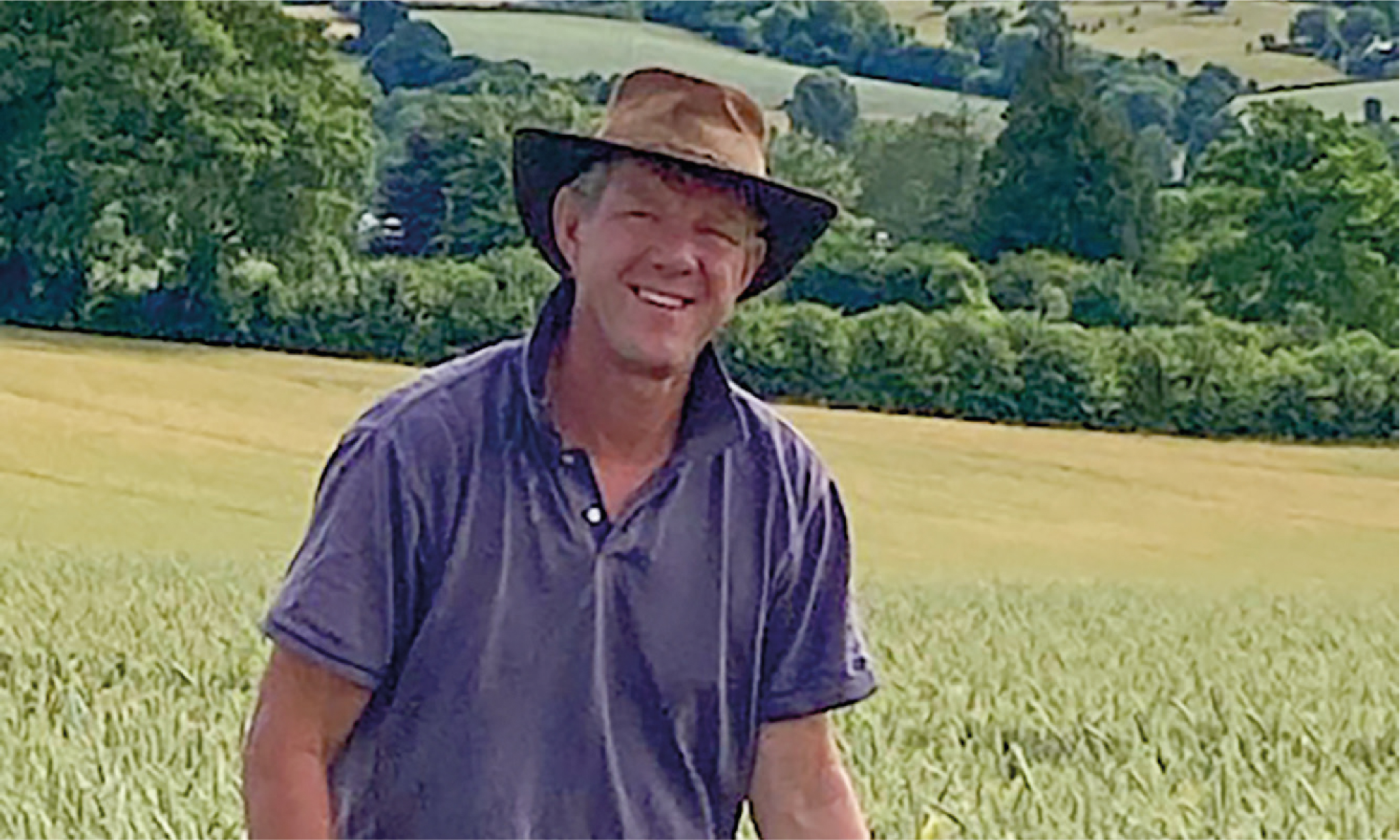
The Soil Farmer of the Year award for 2025 went to John Joseph of Trecorras Farm near Ross-on-Wye, whose decision to focus on soil health, while bringing environmental benefits, was purely economical.
Trecorras Farm produces seed, everything from hybrid ryegrass, herbage seed and wheat and peas but after the drought of 2025 with ‘premiums for seed production dwindling’ John switched to producing wheat for WildFarmed.
John grew up on a mixed family farm in the south west then farmed with his father on an intensive arable farm in East Anglia for twenty years before buying the farm in Herefordshire. But John’s soil health journey started back in 2013 when he was renting land to grow potatoes.‘We had an horrendous year and we watched the potatoes wash down through the village along with our soil. We failed to get any decent crops established and much of it rotted out so I started learning about soils. When you look at why soils are degraded you discover that the products you’re adding - nitrogen and phosphate and potash - are all acidic and can degrade soil life, killing the soil biology. All these things we were doing were destroying rather than enhancing the soil so I tried to reverse that. We stopped using insecticides in about 2013 and in more recent years, we’ve learned to reduce fungicides.’
John says he’s become ‘quite obsessive about soil health’ and is using multiple methods. He aims to boost plant diversity on his pasture ground, creating a multi species herbal ley. On the arable land he is companion cropping (the wheat is a four-way blend, with winter beans and mustard) and cover crops. ‘The most important tool in the soil health box is never leaving the ground without a crop growing on it,’ he says. ‘Cultivation can also damage soil life,’ so he’s had a direct drill custom made to reduce soil disturbance. He’s also been working with a plant nutritionist, feeding the soil biology with molasses, silica and seaweed, ‘adding sugars so the beneficial bacteria have something to eat. A plant with balanced nutrition will be able to fight disease,’ says John, who now grows wheat without using fungicide.
‘I’ve had many arguments with other farmers. They say, “well, it’s all right for you, you can play around being all ideologic while we feed the world”. But every decision I make is economic. I have to earn a living. I had to pay for this farm. And the way I was originally farming, paying more and more money for chemicals and fertiliser and getting less and less results was not good. Once you realise you can cut your nitrogen bill by a third, and then you can also save a huge amount of money by lowering your use of fungicides, soil health makes such good economic sense.’
‘People use worms as a matrix to see if they’ve got a healthy soil and worms need three types of food to thrive on,’ John summarises. ‘They need the green of the plant growing in the ground, the brown of the decaying plant of the previous crop, and the black of the manure or compost. My own compost is made with our cattle manure from the shed in winter.’ John runs a small herd or pedigree Red Polls, with the females going for breeding and the steers going to a local butcher, restaurants and beef boxes. He adds wood chips to the manure as a carbon source, plus a bought in bacteria solution, which all goes into the silo.
John considers it a ‘privilege’ to be named Soil Farmer of the Year, and ‘to be put in the same arena as previous winners.’
*The national Soil Farmer of the Year competition, organised by the Farm Carbon Toolkit and sponsored by Cotswold Seeds, aims to find the best farmers and growers who are engaged with and passionate about managing their soils.
Date Posted: 8th April 2026


