


Spotlight on Lucerne
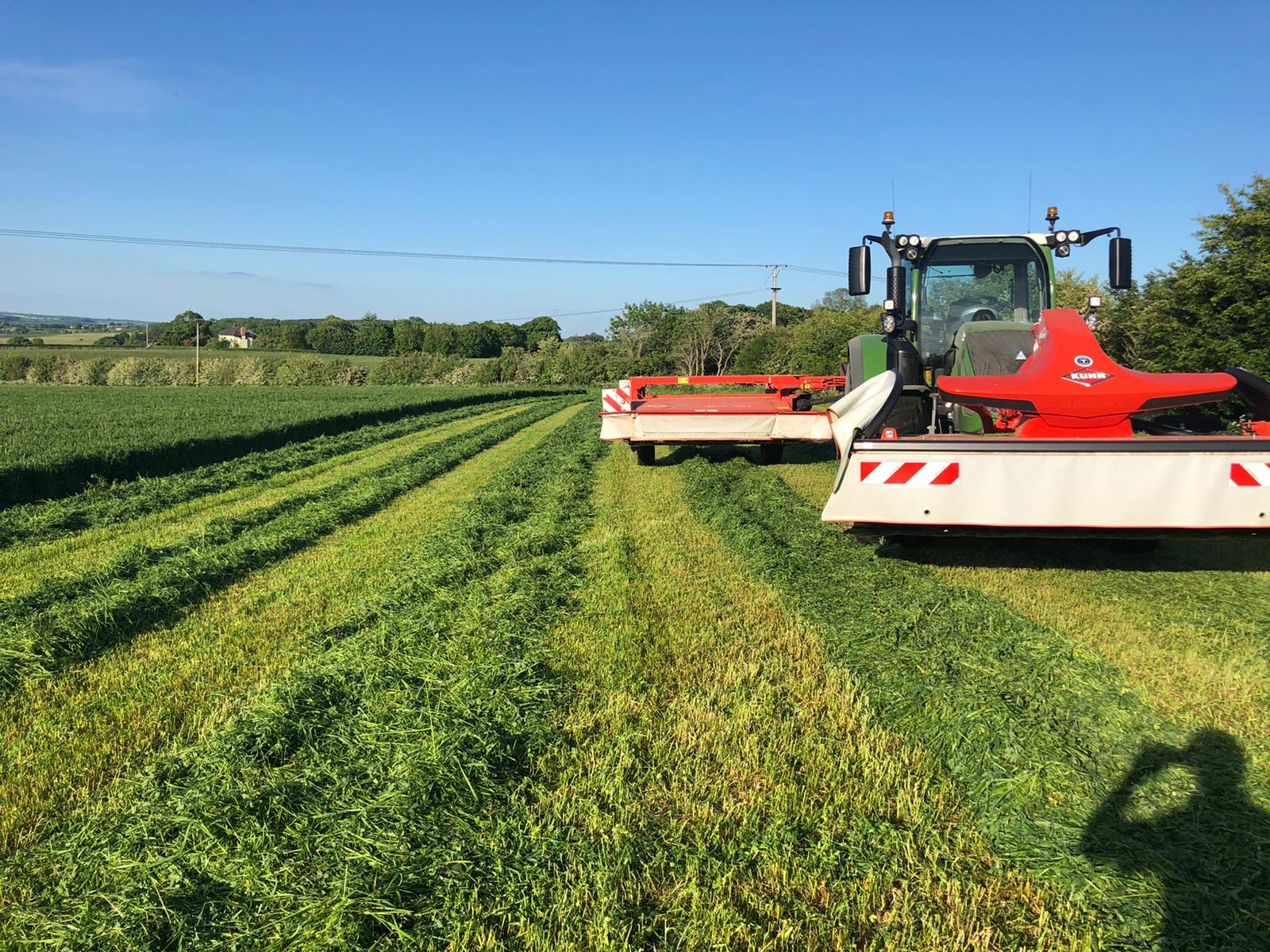

A high protein, drought resistant homegrown forage is extremely valuable to dairy and beef systems, especially a crop that fixes its own nitrogen when fertiliser prices are high!
Lucerne (medicago sativa) is a high protein forage legume which can be used for forage and can be extremely beneficial as a buffer feed in times when grazing may be in short supply, during dry summers and long winters. It is grown in large areas across the world, predominantly in the US, Europe and South America, where it is also known as Alfalfa.
The performance of established stands of Lucerne in dry years is outstanding. Many customers have noted that they managed repeated cuts despite a lack of rain over several months. During this time grass growth had stalled in many areas and silage yields were disappointing.
The Many Benefits of Lucerne
High Protein Content - Lucerne’s high protein content increases milk and meat production and it can be a very useful compliment to high carbohydrate and fibre diets like maize. At around 20% protein, lucerne can be a cheaper alternative to bought in protein like soya and has a higher level of protein than the average perennial ryegrass which is typically 6-8% lower than lucerne.
High Voluntary Intake - It also has a high voluntary intake due to its good palatability which helps increase production. When we speak to farmers who regularly grow lucerne we hear the same comments time and time again: ‘My stock do really well on lucerne, they can’t get enough of it!’
High Yield - Lucerne provides 3 to 4 and sometimes even 5 cuts per year. It has a dry matter yield of 10-15 tonnes/ha, which is comparable to a good perennial ryegrass yield and it offers much better summer regrowth than grass alternatives. It will persist for at least 4 years and in some cases has been known to continue production for up to 5 or 6 years. It is extremely robust with exceptional drought resistance due to its deep roots which often reach deeper than 2 metres throughout the soil profile, which is ideal for dry land farms.
Nitrogen Fixation - The plant is leguminous, which means it can convert atmospheric nitrogen from the air into a resource that can be used to help the plant grow. This is done by a symbiotic association between the root nodules on the plant and soil bacteria called Rhizobium which ‘fix’ atmospheric nitrogen into the soil. Conservative estimates put the amount of nitrogen fixed in the soil at between 150-300 kg of N per hectare, to be used by the plant and potentially by subsequent crops. A healthy root nodule capable of fixing nitrogen is distinguished by its large size and reddish pink colour. They are usually active from spring to early autumn, when soil temperature is relatively warm.
To gain the most from the nitrogen fixation capabilities of lucerne, the seed should be inoculated immediately prior to sowing, especially if this is the first time the plant has been grown in a particular field. Inoculation involves mixing the seed with a strain of bacteria necessary to make the right relationship between the plant and the soil and ensuring the correct strain of rhizobium meliloti is present. A grainy inoculum powder is usually provided with the seeds or pre-dressed on the seed.
Growing Lucerne - Pitfalls and Pointers
So with all these benefits, why is lucerne not being grown more widely in the UK? It has a reputation for being a difficult crop to establish and grow in this country. However advances in varieties and farm machinery, as well as following some simple guidelines, mean these issues can be overcome.
Soil Type, PH and Temperature
The plant thrives on well drained lighter soils with a reasonable pH of 6.2 and above. However crops have been established on heavier soils, but these must have a free draining permeable subsoil, to stop water-logging. Poor drainage, compaction and acidic soils are lucerne’s worst enemy.
Spring through to early summer (Mid August latest) is the recommended time for sowing a lucerne crop. Warmer spring soils, above 8°C, aid the germination and establishment of seedlings. It is notoriously slow to grow in the first year so a late autumn sowing into cooling soils is not recommended.
Companion Species
The advantage of growing lucerne as a pure stand is the flexibility to deal with weeds, although herbicide options are becoming more limited. However, if lucerne is undersown into a spring cereal, the cereal component acts as a nurse crop which helps establishment and can reduce weed competition. Priority should be given to the lucerne crop and the cereal removed as soon as possible. Often the cereal will be taken for whole-crop silage, at the milky stage to allow the under sown lucerne space and light to develop. If an undersowing is carried out the cereal seed rate should be reduced by 1/3rd.
An alternative is to grow a mixture of lucerne and grasses. Less aggressive grass species like meadow fescue and Timothy are often used. Cocksfoot can be a useful companion on particularly dry land, where the deepest roots possible are needed to access moisture. The grasses are included at a low rate so that they do not outcompete the lucerne. A meadow fescue and Timothy mix is tried and tested, sown at 3kgs per acre, while on very dry land Cocksfoot may be included at 1 - 1.5kgs per acre, the low sowing rates aims to stop this more aggressive species dominating.
Companion grasses help to fill in the bottom of the sward, creating competition for weed seedlings. It can also increase yields and improve the overall sugar content of the crop making it easier to ensile. However due to the different seed sizes the species should be sown separately, with the lucerne shallow drilled (max 1cm) and the companion grass broadcast on the surface and rolled in as one.
Harvesting
In the first year of establishment the crop is usually cut, leaving a stubble height of roughly 10cm (avoid scalping the young crop). During year 1 the yield will be approximately 20-40% of the final yield in year 2 onwards. Spring sown crops should be cut by the middle of August to allow adequate time to rebuild root reserves before winter arrives.
Aim to allow the crop to flower once a year from August to allow the plant to focus on putting reserves in to the rootstock before the winter
The harvest in subsequent years should be carried out when the plant is at the early flower bud stage which gives the best balance between yield and quality, which drops off after the flowers have opened. However, for the very first spring, cut at full flowering to allow reserves in the plant to fully develop.
After year 1 the crop is usually harvested around the second or third week of May. Subsequent cuts at 6 week intervals can be carried out with good regrowth occurring throughout the summer months. The last cut should be carried out 6 weeks before the end of the growing season, in the middle of October.
Typically Lucerne is not thought of as a grazing crop, as set stocking a Lucerne field for long periods of time can damage the plant crown, between the last leaf and soil surface. This can lead to moisture and rot affecting the health of the plant, causing it to die off. A brief graze may be beneficial at the end of the season if the crop is particularly leafy going into the winter, however it should be noted that bloat can be a risk when grazing a standing crop. The risk of bloat is almost entirely reduced once the crop is conserved into silage or hay.
Making Silage and Hay
A Lucerne crop will often be conserved into silage or hay for fodder later in the season. Traditionally it has been ensiled into the silage pit for over winter use. The characteristics of the plant mean that it has a low sugar content and high buffering capacity, which makes lowering the pH difficult. Lowering the pH is important to ensure the crop is properly fermented and is correctly preserved in the clamp or bale. A silage additive can help make this process more reliable. Big balers and wrappers have made silaging Lucerne into bales quicker and easier to handle, with less wastage than traditional clamp silage. Mower conditioners with crimpers can help speed up the wilting process, when making silage. When wrapping big bales, it is useful to note that several layers of plastic should be used to reduce the chance of stems puncturing the wrapping.
Lucerne can also be made into hay, although this is a trickier process than silage making. The stem takes longer to dry than the leaves, resulting in a higher leaf loss due to shattering if it is over dried or moved too many times. The crop should be turned when dew is on the ground and the leaves are less brittle and it should be moved gently, as few times as possible to reduce losses.
Although there can be several challenges to growing lucerne, the benefits of a high protein crop, with no reliance on artificial nitrogen and excellent drought resistance makes it a very profitable crop in the beef and dairy sector.
The many advantages of lucerne may help to bring renewed interest in this ‘shrinking violet’ of UK livestock forage.
Author: Sam Lane
Date Posted: 29th April 2026


