


Why you should consider including Plantain in your pastures
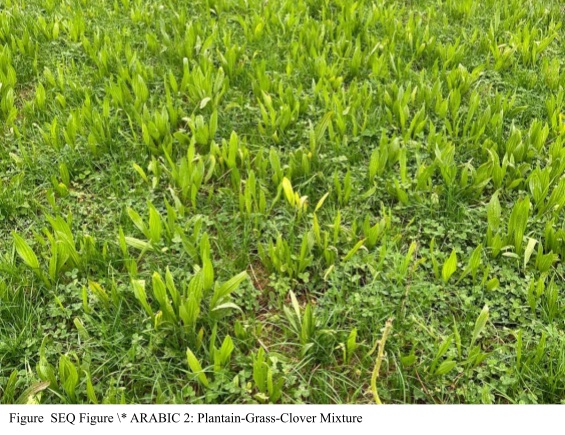

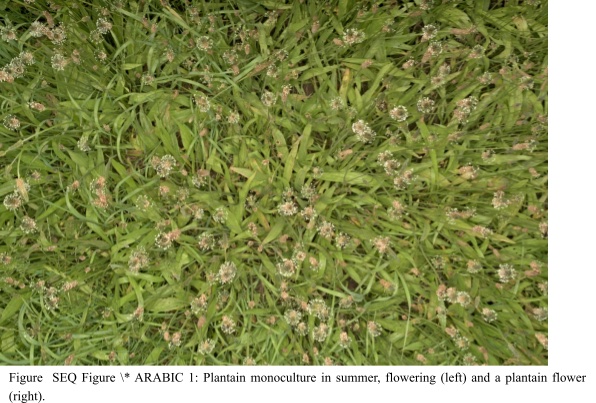
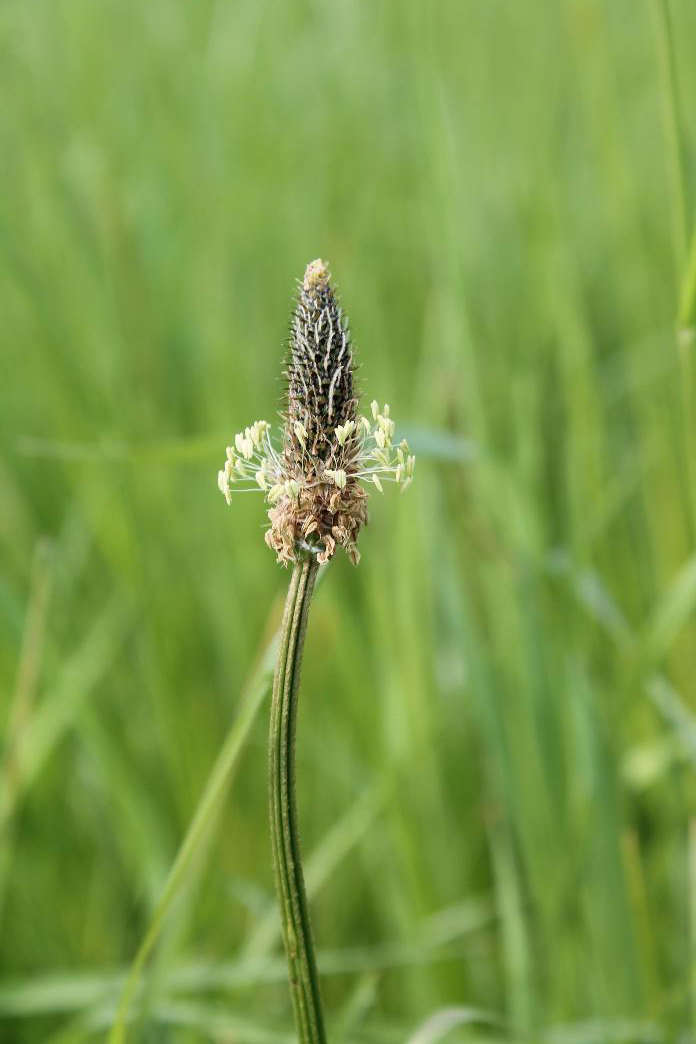
Introduction
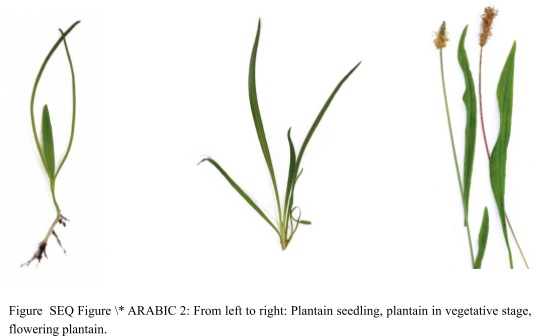
Plantain (Plantago lanceolata), also called Ribgrass, is a deep rooting, perennial forage
herb, which grows well in mixtures with grasses, clovers and other forage herbs. Its growth
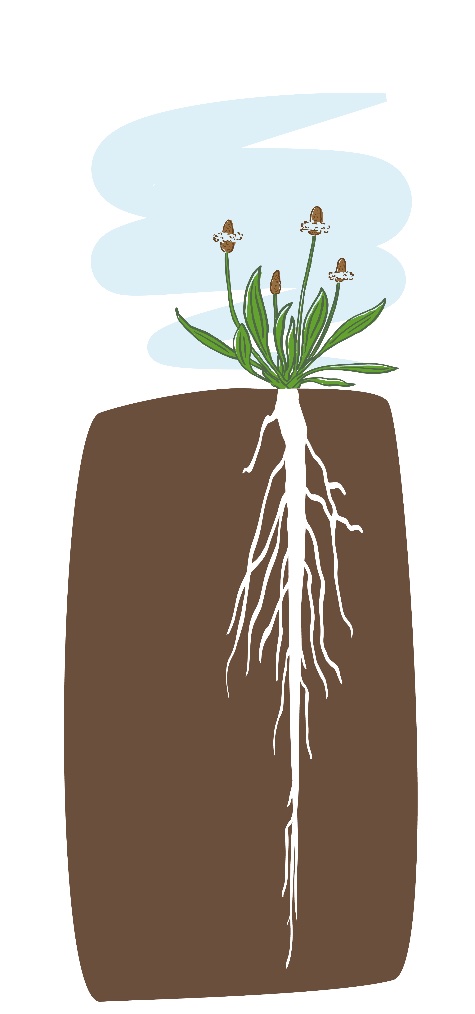
peaks in summer and it has both a small taproot and fibrous roots.
It can help bridge the summer feed gap, providing high quality feed for animals, while also
supporting a resilient and sustainable pasture system. Plantain can bring big benefits, but
good management is key to keep it in the sward as persistence and dominant grasses can
be challenge.
How can I grow plantain?
You can grow plantain in monocultures, clover-herb mixtures or in grass-based herbal
leys (1). Its growth peak in summer combines well with spring-peaking grasses, bridging the
summer forage gap. Though it is slightly lower yielding than ryegrass alone, it does well in
mixtures (1) , maintaining high dry matter (DM) yields when added to grass-clover swards (2) .
Clover fixes nitrogen from the atmosphere, benefiting other plants in the mixture that can
take it up from the soil. Plantain can access this nitrogen, but does not compete as strongly
for it as grasses (3) . This leaves nitrogen for grasses, while plantain can access deeper soil
layers with its taproots, leading to a resource-efficient pasture.
You need to ensure an appropriate management, otherwise plantain can disappear from the
mixture over time, especially when outcompeted by grasses. In grass-based mixtures,
plantain can maintain DM proportions of 20 %, then decline to <10 % 4 , particularly with
perennial ryegrass. In grass-free and clover-based mixtures, it can persist up to 5 - 6 years though.
So how do I manage plantain-pastures?
You can manage your plantain-pastures like a grass-clover ley and cut or graze at a similar
rotation length. Try aiming for a 3-week rotation length during summer and autumn. That
helps a good recovery of energy reserves, especially after grazing lower than 5 cm. You
should avoid continuous grazing/set stocking to maintain plantain proportions in grass-
based mixtures, as grasses tolerate that better than plantain. Make sure to cut or graze
plantain-pastures frequently: If you let them grow old and stemmy in late spring or
summer, the quality will drop. This also helps control the grasses. Grazing 3 - 4 weeks after
establishment helps regulate the grasses and support plantain. Including other grasses than
perennial ryegrass, such as cocksfoot or tall fescue, can be a good choice as well. In herb-
clover swards with chicory, harder grazing (down to 4 cm) can promote plantain, but a higher
residual biomass keeps the mixture more balanced (1 ).
It is important to avoid trampling in winter to protect the limited residuals. Plantain-pastures
can also be used for silage. Just keep in mind the higher water content, which can lead to a
slightly higher pH, making fermentation more challenging (1).
How about droughts, can Plantain cope with dry summers?
Yes! You probably know better than anyone, that with higher drought risks and variable weather, a resilient pasture is a game changer. Diversity is important, and deep rooting herbs can bring a lot of benefits into your pastures. Including plantain can be a good choice, especially because it has a flexible root system.
Both chicory and plantain form deep taproots, which allow them to reach water and nutrients from lower soil layers during dry periods (5) . Plantain is not as deep rooting as chicory but maintains good growth during moderate drought and recovers well (6) . Plantain roots can even adapt to their environment: When a lot of
water is available, it can replace its taproots with a higher amount of fibrous roots, which can take up nutrients more efficiently (5) . This flexibility makes plantain ideal for variable weather conditions.
Will my animals like it?
Absolutely! Cows grazing plantain-grass-clover swards often maintain or even increase milk yields, especially if plantain makes at least 30 % (of DM) of the diet (7, 8) . The lactation stage of your cows also plays a role: Milk yields go up mostly during late lactation when feeding plantain 2 . Lamb life weight gains can also increase on pastures with plantain (9,10) . Plantain delivers an excellent forage quality and can boost production – Let´s have a look at why!
Animal nutrition and health
Plantain can ensure a healthy diet for animals and eventually humans. Food and forage nowadays have often lower mineral contents than in the past. Herbs like plantain have generally higher mineral contents than ryegrass or clover, so that its inclusion increases mineral contents in the sward (2) . Plantain is especially rich in key micronutrients like Copper, Iodine and Selenium (11) . Plantain can even support animal health: Although not as strong an effect as other herbs, there is some evidence showing that plantain can reduce certain parasite levels in lambs (Paramphistomum spp. & coccidial parasites) 12 and calves (gastrointestinal parasites) (13) . It should not replace wormers, but it could support parasite control as part of an integrated strategy.
But how can plantain increase animal production?
Well, it is mostly because of its excellent forage quality. That includes mineral contents and other properties supporting animal health as explained above, but it is mostly associated with a good balance of energy, fibre and protein. If forage delivers too much available nitrogen but too little energy for the microbes in the rumen to break it down, that nitrogen will be wated instead of being turned into meat and milk: Too much nitrogen in the rumen can (4) cause bloating, it accumulates as ammonia and is then lost via the animal urine. This can happen when grazing lush grass-clover swards, containing a lot of degradable nitrogen (14 ). Plantain has a high water content and contains more “soft” fibre that delivers energy and less “tough” fibre than ryegrass and ryegrass-clover mixtures (2) . It and a similar total nitrogen concentration, but out of that, less is soluble and degradable in the rumen (14) . This combination means a more favourable energy-protein ratio in the rumen, so that animals use more nitrogen from the forage instead of losing it. Although plantain also provides high amounts of protein, there is enough energy for the microbes to break it down in the rumen. Plantain also has more protein that is undegradable in the rumen. This allows the animal to take up more protein: Instead of feeding the microbes in the rumen, it can be absorbed by the animal at the small intestine. All this improves nitrogen efficiency: Animals can use more nitrogen for meat and milk production (and some goes into faeces), instead of losing it via the urine (7 ). This can explain a higher milk production and animal life weight gains.
Plantain also contains different natural chemical substances, which can help reduce nitrogen losses. Some do so by providing more energy for microbes in the rumen to break down the forage. Others slow down microbial fermentation, allowing more protein to pass the rumen undigested and be taken up by the animal later (15) . Concentrations of these substances can increase over the growing season and are highest in ecotypes, more natural or original plantain cultivars.
Don´t worry, no need to remember all details. What you need to know is that including plantain into your pastures can improve forage quality and animal production, as well as support animal health. For more nformation about ruminal digestion, read here (insert Raniel's article link.)
Let's think about the Future: Environmental benefits
Through the animal
You might now think: “Hmm isn´t all this stuff about nitrogen also good for the environment?”. And you would be completely right! Livestock often comes into focus when it comes to nitrogen losses: Although grazing brings many benefits, animal excretions can be a problem. Urine patches can contain up to 1000 kg
N/ha –much more than you would apply to your fields 16 ! Especially in such high concentrations, nitrogen can pollute waters and be lost as greenhouse gases into the atmosphere, accelerating climate change.
Plantain in the diet can reduce these nitrogen losses to some extent: the urinary nitrogen concentration can be reduced by up to 75 % 10 and the total amount of urinary excreted nitrogen by up to 22 % 17 . As explain previously, feeding plantain can increase the nitrogen utilization for several reasons. The nitrogen excretion via the urine is then reduced causing lower total nitrogen loads on the field 8 . This is not only beneficial for production, but also for the environment (17) . Additionally, the higher water content of plantain makes animals urinate more: They will produce more urine that consequently has lower nitrogen concentrations. Even though this does not reduce the total amount of excreted nitrogen, it distributes the nitrogen more evenly in the field over a higher number of urine patches instead of a few hotspots.
In the soils
Nitrogen in plantain-containing pastures tends to be more in the form of ammonium, which is less likely to be washed out (leached) than nitrate, as it binds more strongly to the soil (19). Instead of losing valuable fertilizer, the nitrogen stays right where you need it and can be taken up by your plants! Nitrogen leaching is less of a problem and nitrous oxide emissions – a very potent greenhouse gas - are cut by up to 39 % in plantain-pastures (20) . It seems that plantain roots release some not yet identified chemical substances, which can inhibit nitrification (21) - the reaction turning ammonium into nitrate. This effect even shows when
urine from plantain-fed animals is applied to the soil. It is strongest right after the application and varies depending on the length of grazing period, plantain cultivar and the proportion in the diet (22) . While evidence is still limited and more research is needed (1) , plantain seems to offer some sort of natural nitrification inhibition, nevertheless.
Plantain can therefore reduce nitrogen losses both in the animal and in the soil, which is a win for the environment and for your pocket 10 : More nitrogen ends up in the plants and eventually the animal, not down the drain or in the air causing pollutions.
So why use plantain?
If you still wonder why, well, summarised it can be said that including plantain in your pastures brings a bunch of benefits: Diversifying your pasture makes it more resilient against varying weather conditions, plantains deep and flexible root system makes it quite drought tolerant and especially efficient. Plantain combines well in mixture with grasses and legumes; it delivers excellent forage quality ensuring animal health and nutrition. It can even boost animal production and reduce nitrogen losses through the animal and in the soil. That is great for the animal, your wallet and the environment altogether. Challenges in establishment and persistence can be managed – and wouldn´t you say they are worth the benefits?
References
1 Dodd, M. B., Pinxterhuis, I. B. & Judson, H. G. Narrow-leaved plantain (Plantago lanceolata
L.): A review of research on forage management within temperate grazing systems.
Grassland Research 4, 41-56 (2025).
2 Nguyen, T. T., Navarrete, S., Horne, D. J., Donaghy, D. J. & Kemp, P. D. Incorporating
plantain with perennial ryegrass-white clover in a dairy grazing system: dry matter yield,
botanical composition, and nutritive value response to sowing rate, plantain content and
season. Agronomy 12, 2789 (2022).
3 Pirhofer-Walzl, K. et al. Nitrogen transfer from forage legumes to nine neighbouring plants in
a multi-species grassland. Plant and soil 350, 71-84 (2012).
4 Rodriguez-Firpo, F., Hedley, P., Dodd, M., Duker, A. & Chandler, D. Performance of plantain
pastures on Tararua dairy farms. Journal of New Zealand Grasslands, 67-72 (2022).
5 Lubbe, F. C. et al. Creating a root architecture model: taprooted or adventitious-rooted
Plantago lanceolata. Folia Geobotanica (2023).
6 Cranston, L. M., Kenyon, P. R., Morris, S. T., Lopez-Villalobos, N. & Kemp, P. D.
Morphological and Physiological Responses of Plantain (<i>Plantago lanceolata</i>) and
Chicory (<i>Cichorium intybus</i>) to Water Stress and Defoliation Frequency. Journal of
Agronomy and Crop Science 202, 13-24 (2016).
7 Minnée, E. M. K., Leach, C. M. T. & Dalley, D. E. Substituting a pasture-based diet with
plantain (Plantago lanceolata) reduces nitrogen excreted in urine from dairy cows in late
lactation. Livestock Science 239, 104093 (2020).
8 Navarrete, S. et al. Nitrogen Excretion by Dairy Cows Grazing Plantain (Plantago lanceolata)
Based Pastures during the Lactating Season. Animals 12, 469 (2022).
9 Kemp, P. D., Kenyon, P. R., Morris, S. T. & Somasiri, S. C. in Proceedings of the 22nd
International Grassland Congress. 561-562.
10 Pinxterhuis, J. B. et al. Implementing plantain (Plantago lanceolata) to mitigate the impact of
grazing ruminants on nitrogen losses to the environment: A review. Grass and Forage
Science 79, 144-157 (2024).
11 Darch, T. et al. The Mineral Composition of Wild-Type and Cultivated Varieties of Pasture
Species. Agronomy 10, 1463 (2020).
12 Reza, M. M. et al. Response of plantain (Plantago lanceolata L.) supplementation on
nutritional, endo-parasitic, and endocrine status in lambs. Tropical Animal Health and
Production 53, 82 (2021).
13 Sievers, G. & Nannig, S. Efecto de la alimentación suplementaria con Plantago lanceolata
sobre la oviposición de parásitos gastrointestinales en terneros. Archivos de medicina
veterinaria 38, 233-238 (2006).
14 Minnee, E. M., Kuhn-Sherlock, B., Pinxterhuis, I. J. & Chapman, D. F. Meta-analyses
comparing the nutritional composition of perennial ryegrass (Lolium perenne) and plantain
(Plantago lanceolata) pastures. Journal of New Zealand Grasslands, 117-124 (2019).
15 Navarrete, S., Kemp, P. D., Pain, S. J. & Back, P. J. Bioactive compounds, aucubin and
acteoside, in plantain (Plantago lanceolata L.) and their effect on in vitro rumen fermentation.
Animal Feed Science and Technology 222, 158-167 (2016).
16 Di, H. J. & Cameron, K. C. Nitrate leaching in temperate agroecosystems: sources, factors
and mitigating strategies. Nutrient Cycling in Agroecosystems 64, 237-256 (2002).17 Nguyen, T. T., Navarrete, S., Horne, D. J., Donaghy, D. J. & Kemp, P. D. Forage plantain
(Plantago lanceolata L.): Meta-analysis quantifying the decrease in nitrogen excretion, the
increase in milk production, and the changes in milk composition of dairy cows grazing
pastures containing plantain. Animal Feed Science and Technology 285, 115244 (2022).
Author: Meret Kaspereit
Date Posted: 12th May 2026


