

 Seed
SeedTufted Hairgrass
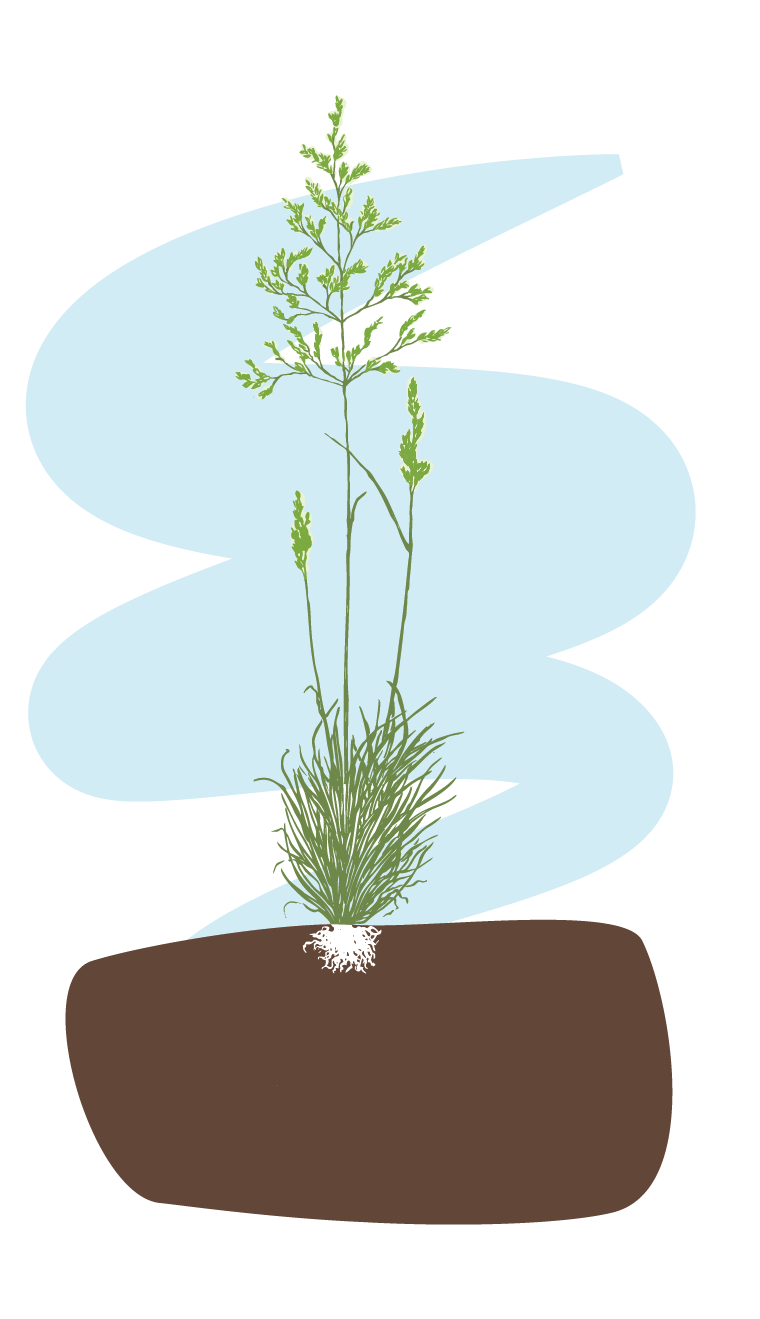
A notably tall, tufted perennial as it reaches maturity. The rich green, ribbed leaves and prominent panicle make it an eye catching addition to gardens.
Uses
Generally used as an ornamental species.
Persistence
A perennial species.
Strengths
The rich green foliage stays green throughout the winter, providing form and cover in gardens, when many other species die back.
Sowing Rate Advice
Rarely sown as a pure stand
20kg per acre / 50kg per ha.
Management
Allowing Tufted Hairgrass to grow, without management, leads to the formation of large, coarse tussocks, which can be difficult to mow or cut.
Distinguishing characteristics
SeedSeed
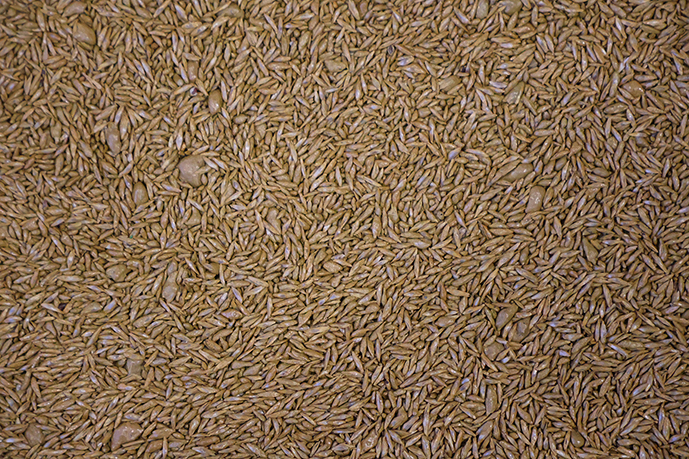
Ovate and blunt ended in shape. The seed is light brown to amber in colour, with a noticeably smooth and shiny texture. It’s a small seed approximately 1mm in length.
Flowering Plant
A densely tufted species, getting taller and thicker as it matures.
The leaves are flat and prominently ribbed, with longitudinally running lines, the upper surface of the leaf is rough, along with the ribs and margins.
This species has a large ligule, which can reach 15 mm in length and is sharply pointed.
The culms are tall and rough towards the panicle, which is loose and nodding. It varies in colour from green, silvery, golden or purple, or an amalgamation of these colours.
It is noted for growing as tussocks.
This species is tall, reaching from 20 cm when young to 120 cm in height.
Additional Info
Flowering from June - August. Generally not favoured by livestock

You can find Tufted Hairgrass in the following mixtures
History
Caespitose means having a tuft.
Related Articles

Cotswold Grass Seeds, Cotswold Business Village, London Rd, Moreton-in-Marsh GL56 0JQ
Web design and development by Pixel Concepts


