

 Seed
Seed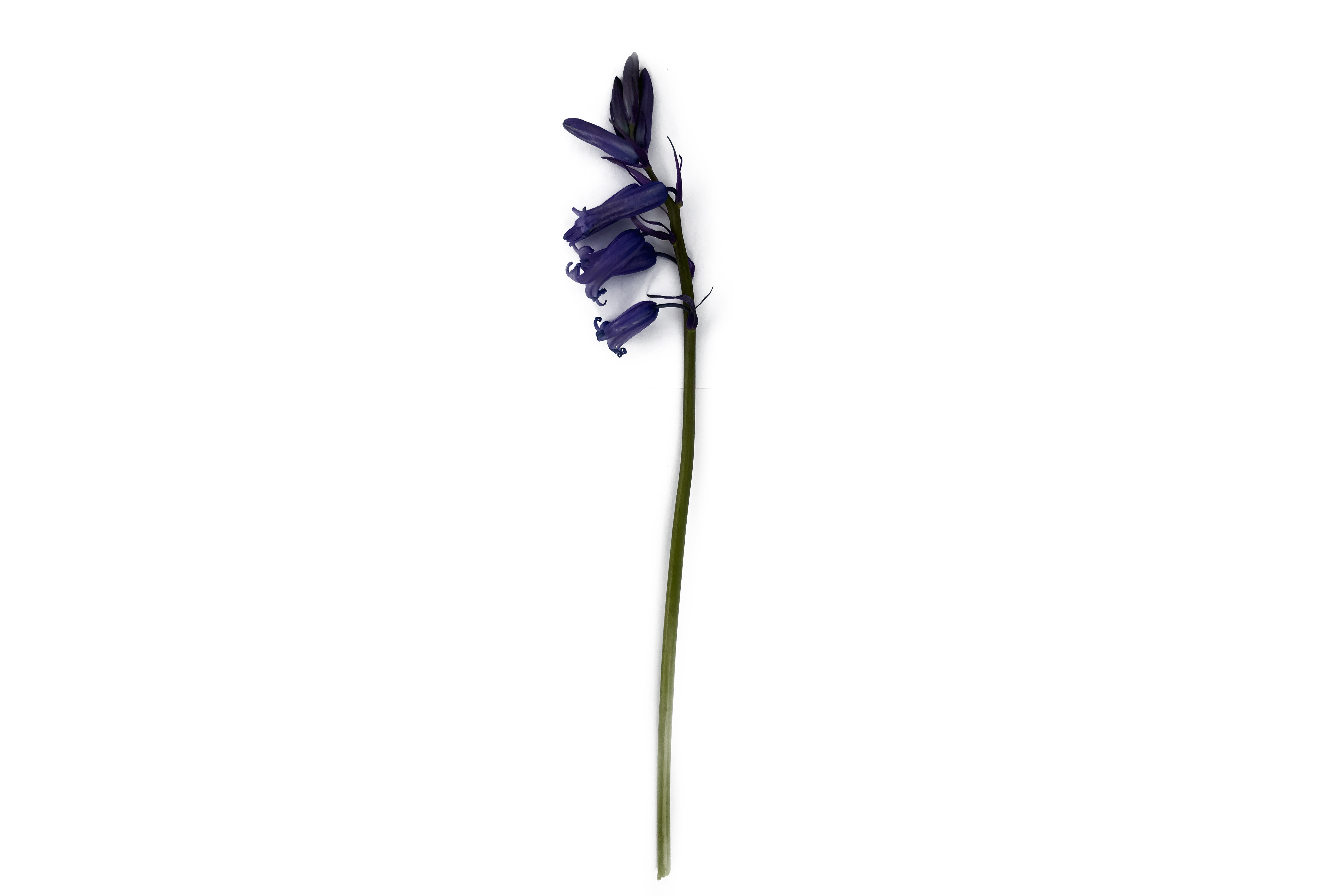 Flowering Plant
Bluebell
Bluebells are a very common springtime sight, a short carpeting perennial in a beautiful vibrant blue and occasionally white colour.
Uses
Bluebells are perfect for adding character and colour to a meadow, hedgerows, and slightly shady areas like woods.
Persistence
Bluebells are quite a persistent species with some resistance to weed killer, the bulbs must be removed in order to fully remove the species.
Strengths
Bluebells flower much earlier than other woodland plants, being of high nectar value to insects like bees, butterflies and hoverflies.
Frost Tolerance
The English Bluebell is quite a hardy species, they don't mind the cold and are able to survive in low temperatures for short periods of time.
Sowing Rate Advice
1g/m2
Ideal Sowing Time
Bluebells require fairly warm and moist ground followed by a cooler period before germination, due to this it is recommended to sow in late summer. However the seed will eventually germinate if sown at any time of the year.
Management
Bluebells require very little management. Trampling or pulling out the bulb centers of bluebells will kill them, but cutting does not affect persistency.
Distinguishing characteristics
SeedSeed
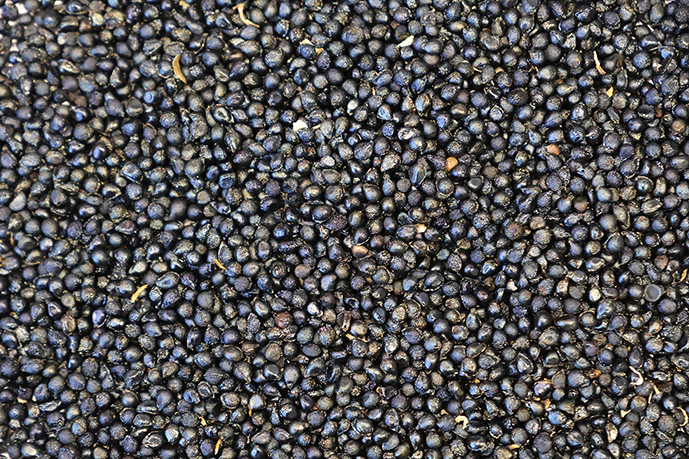
Bluebell seeds are fairly small and round in shape with a very shiny finish.
Seedling
Bluebell seedlings are fairly long, thin and look very similar to a single blade of grass, sometimes it will be one individually or a cluster.
Flowering PlantFlowering Plant
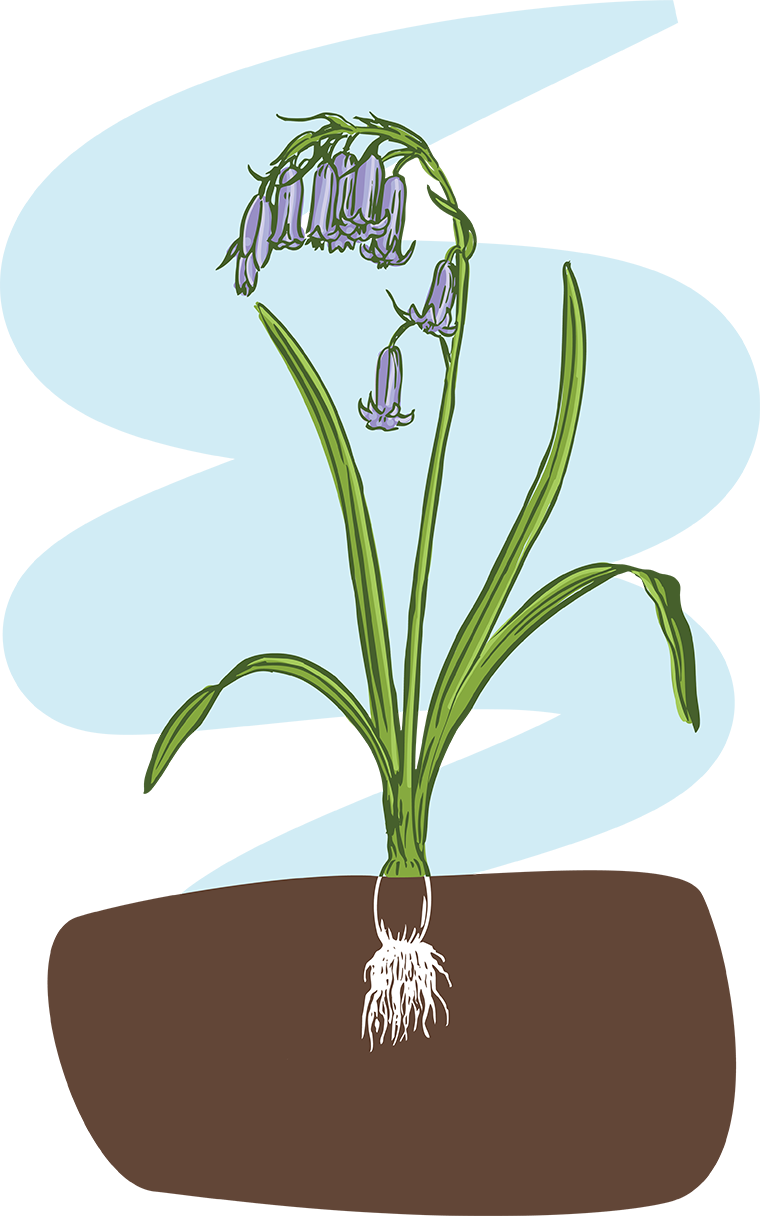
Short hairless carpeting perennial, leaves are linear, keeled with a hooded tip all from the roots. Flowers azure blue, occasionally white. They are elongated bell-shaped, fragrant in a long one-sided spike, curling at the tip and full of yellow stamens.
Additional Info
Flowers April-June. They have a faint honey smell.
You can find Bluebell in the following mixtures
History
In the Elizabethan era bluebell bulbs were crushed to create starch for the ruffs of collars and sleeves, the sap was once used to bind pages of books.
Related Articles

Cotswold Grass Seeds, Cotswold Business Village, London Rd, Moreton-in-Marsh GL56 0JQ
Web design and development by Pixel Concepts


